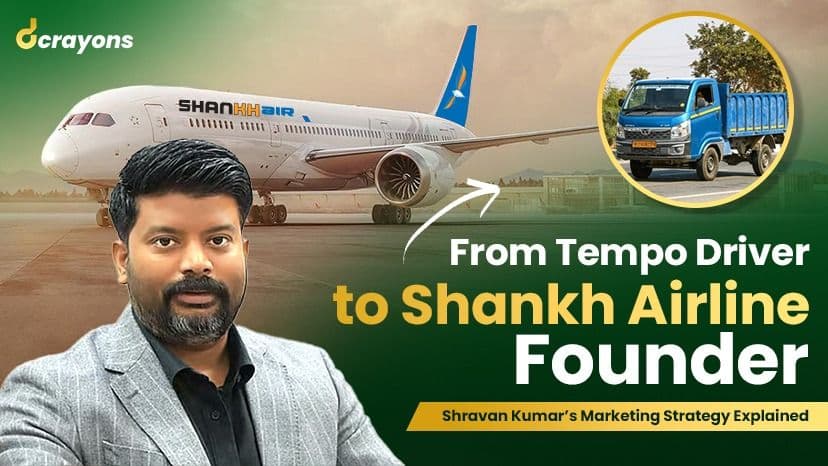
The story of a boy who grew up in the streets of Kanpur and made his way to the boardroom of a new airline called Shankh Airline. Shravan Kumar Vishwakarma. is not only a rags-to-riches tale, but also an excellent lesson in contemporary marketing built on identity, story, and unconventional positioning.
His journey challenges the conventional beliefs about entrepreneurship, branding and penetrating the very competitive Indian aviation market. Shravan's airline is projected to start operations in the first half of 2026, with an initial fleet of three Airbus planes connecting leading cities like Lucknow, Delhi, and Mumbai. and, in the long term, the rest of the country and even abroad.
The unique thing about Shravan's path is not only the airline he is starting but the way he is building a brand before the first passenger boards the plane. We deconstruct the fundamental marketing strategy approaches and decisions that have turned the story of Shankh Airline into one of the most discussed business tales in India today.
1. Building Brand Identity Through Storytelling
Authenticity as a Core Asset
From the very beginning, Shravan Kumar has made his personal backstory central to Shankh Airline's identity. His transformation from a loader and tempo driver in Kanpur to a successful businessman and airline founder has become the defining image of the airline itself.
In every media interaction, Shravan openly recounts his early struggles: working as a loader, driving tempos and autos, and launching several small businesses that initially failed before his breakthrough. This narrative isn't just inspirational; it serves as the emotional anchor of his brand.
By owning his past unequivocally, Shravan:
Built trust day-by-day with the people of India by sharing the journey of the man behind Shankh Airline. The middle-class and first-time entrepreneurs especially found it very relatable. The company has been able to distinguish itself from others run by business professionals or industry giants.
By following this path, the startup has tapped into one of the biggest cultural values: the idea that dreamers can become the very people they dream of being if they show enough stamina and strength of character. This is not only marketing. it is a story that everybody wants to know and discuss, which in turn has drawn a lot of organic media attention.
2. Positioning Aviation as Accessible and Inclusive
Breaking the 'Luxury' Perception
One of Shravan's signature marketing messages is his reframing of Airline travel itself. Instead of presenting flying as a luxury experience reserved for the wealthy, he asserts that an aircraft is just another means of transport like a bus or a tempo.
This positioning is subtle but powerful for several reasons:
It resonates with price-sensitive travelers. Shankh Airline does not want to make air travel a luxury but rather to bring it down to everyday transport, announcing its price and normalcy rather than its exclusivity.
It targets first-time flyers. Suddenly, the middle-class Indians who may have thought of flying as out of reach see it as a choice within their reach.
It goes against the industry norm. Comfort, status, and premium service are the main marketing tools for most airlines. On the other hand, Shankh Airline's message of inclusiveness and everydayness is a bold contrast.
The positioning is not only a matter of philosophy. the whole of Shankh Airline's marketing language, through interviews, press coverage, and public messaging, consistently emphasizes accessibility above prestige.
3. Using Earned Media and PR Over Traditional Advertising
Shravan has relied heavily on earned media. coverage in traditional news outlets, interviews, and social media amplification. rather than expensive ad campaigns or celebrity endorsements.
Why This Matters
Cost Efficiency: Being a startup in a capital-intensive industry like aviation, avoiding heavy paid marketing spend allows more resources to be invested in operations and fleet expansion.
Higher Credibility: Stories covered in reputed outlets like The Economic Times, Business Standard, and national news agencies carry credibility that paid ads rarely achieve.
Viral Potential: Shravan's personal journey combined with the surprising fact that a former tempo driver now runs an airline is inherently share-worthy. It has generated coverage across TV, print, and online platforms, turning the founder into a recognizable public figure before the airline even takes flight.
By becoming the face of the brand, Shravan effectively humanizes Shankh Air, making the company's launch a story about aspiration and opportunity rather than just a business announcement.
4. Strategic Timing and Regulatory Messaging
Timing is often an underrated aspect of marketing strategy, and Shravan appears to have mastered it.
NOC and Government Backing
Shankh Airline received its No Objection Certificate (NOC) from the Ministry of Civil Aviation in late 2025, a pivotal milestone in the airline's journey.
Shravan used this regulatory approval as a strategic communication moment:
- It reinforced legitimacy.
- It signaled progress toward launch.
- It built anticipation among prospective customers and the aviation community.
Sharing such updates strengthens trust and reduces uncertainty, especially critical in a sector where operational launches can be unpredictable.
5. Targeted Market Positioning
Regional First Focus
Shankh Air's initial route strategy is designed to connect major cities with underserved or emerging regional markets, particularly in Uttar Pradesh, including hubs like Lucknow and the upcoming Noida International Airport (Jewar).
This approach supports the brand's broader promise of accessibility:
- Serves first-time flyers
- Captures demand from regions often overlooked by larger carriers
- Builds loyalty early among passengers seeking convenient domestic connectivity
While many airlines compete in saturated metro-to-metro routes, Shankh Air's regional strategy allows it to build a base of travelers who may not have flown frequently before. aligning tightly with Shravan's brand vision.
6. Cultural and Emotional Branding
Shravan's marketing isn't purely functional; it's deeply emotional.
Echoing Aspirational India
The narrative of upward mobility. from humble beginnings to ambitious heights. resonates with millions of Indians who see similar dreams in their own lives. This emotional branding rebuilds Shankh Airline from a transport provider to a symbol of possibility.
Shravan often contextualizes his ambition within broader social constructs: overcoming limited expectations, challenging class-based notions of who can enter elite sectors like aviation, and expanding opportunity for all. This makes his message both personal and socially relevant.
7. Long-Term Vision Messaging
Shravan's communication isn't limited to short-term launch goals; he articulates a long-term vision for Shankh Air:
- Expanding fleet size significantly in the coming years
- Growing domestic coverage
- Transitioning to international operations by the late 2020s
This forecasting serves multiple purposes:
- Attracting talent and partners who want to be part of a growth story
- Signaling confidence to investors and stakeholders
- Positioning Shankh Airline as a future big player, not just a regional niche airline
This future-oriented messaging complements the brand's current identity and reinforces its legitimacy in an industry where scalability matters.
8. Learning from Challenges and Skepticism
It is necessary to recognize that some users on the internet are doubtful about Shankh Air's trustworthiness because of the limited operational infrastructure seen so far and the unusual background of the founder.
Nevertheless, Shravan's marketing. based on openness, regular updates, and synchronization of expected milestones (such as the January 2026 launch) with public communication. combats skepticism and supports the brand's narrative control.
By constantly informing the public about progress and the company's plans, the brand keeps projecting a positive image.
Overall Summary
Shravan Kumar's marketing strategy for Shankh Airline is not the usual one for an airline startup or large corporate launch. On the contrary, it is a heavily narrative-driven, human-first approach that uses the brand's authenticity, emotional connection, timing, and special positioning to develop brand equity even before actual operations start.