
Furniture is not just about tables and chairs. It is about lifestyle, affordability, culture, and experience. When we talk about brands that rebuilt everyday living into a global movement, IKEA stands at the top of the list.
IKEA was established by a young Swedish man Ingvar Kamprad in the year 1943 as a small mail-order company. Gradually, it grew to be the largest furniture retailer in the world. What is so remarkable about IKEA is not necessarily the product itself but the marketing psychology, innovation in the cost form and positioning of the brand worldwide that rebuilt a small Swedish business into a global phenomenon.
IKEA has hundreds of stores across the world today in over 60 countries. Its success has been a master series of strategic branding, consumer psychology, and scalable marketing systems.
Who Founded IKEA and What Was the Original Idea?
The origin of IKEA can be traced back to Ingvar Kamprad starting in 1943 in Sweden. First the company was selling small household items such as pens and wallets. Later in 1948, furniture was introduced.
The actual revelation was achieved through the introduction of flat-pack furniture by IKEA in the 1950s.
What is flat-pack furniture?
The flat-pack furniture is packaged in small boxes that customers can assemble at home.
This concept lowered the transportation charges, warehousing and the price of products. It enabled IKEA to sell stylish furniture at reasonable prices, which the competitors were not doing then.
IKEA had a defined vision since its inception:
"To create a better everyday life for the many people."
This mission still defines the brand today.
How IKEA Built a Global Expansion Strategy
The growth of IKEA did not happen by chance. It had a planned global expansion plan:
- Enter high-demand urban markets
- Maintain standardized store layouts
- Keep pricing affordable
- Adapt slightly to local cultures
In 1963, the first foreign store was opened in Norway. IKEA has penetrated Europe, North America, Asia, and the Middle East over the decades.
When did IKEA launch in India?
IKEA started its Indian operations in 2018 with Hyderabad being its first store.
The reason why India was a strategic move was because:
- Rising middle-class population
- Growing urban housing demand
- Price-sensitive consumers
IKEA adapted to the Indian audience by:
- Providing smaller furniture that would fit small houses.
- Adding local foods in the cafeteria.
- Local sourcing of products to save on costs.
- Localizing Indian buying power pricing.
This is a demonstration that global brands need to localize without compromising the brand identity.
Why Is IKEA So Famous Worldwide?
IKEA’s popularity is not accidental. It is built on five strong pillars:
1. Affordable Design
IKEA is a chain that brought middle-class families close to modern Scandinavian design.
2. Unique Store Experience
The stores are modeled as walk-through showrooms. Customers experience:
- Model apartments
- Inspiration setups
- Guided buying journeys
The store itself acts as a marketing tool.
3. Self-Assembly Model
Customers are given options to assemble their products resulting in lower costs of operation and participation.
4. Emotional Branding
IKEA advertisements are targeted at the family, relations, home, and reality.
5. Sustainability Messaging
Reducing costs on the sources of renewable energy and sustainable sourcing, IKEA is investing heavily on it, and that creates trust in the mind of the environmentally-aware consumers.
IKEA’s Marketing Strategy: The Real Growth Engine
IKEA does not just use conventional advertising. Its marketing combines:
- Behavioral psychology
- Cost transparency
- Digital storytelling
- Community-focused campaigns
IKEA’s biggest marketing strength is experience-based branding.
IKEA not only sells furniture, but
- Smart living
- Space solutions
- Budget-friendly lifestyle
Its catalogs had become iconic even before social media. The brand is currently controlling online search, influencer marketing, and home inspiration platforms.
How IKEA Turned Cost Leadership into Brand Power
Many brands become cheaper, and are perceived to be of low quality. IKEA did the opposite.
By designing products for flat-pack shipping, bulk production, and in-house manufacturing partnerships, IKEA kept prices low without looking "cheap." This strategy created a strong psychological advantage:
Affordable does not mean low value . it means smart choice.
That positioning helped IKEA build global trust.
How IKEA Caters to Modern Audiences
Today’s IKEA focuses heavily on:
- Small-space living solutions
- Smart storage systems
- Online shopping convenience
- Click-and-collect services
- Augmented reality apps for room previews
The digital revolution has enabled IKEA to stay in touch with the evolving customer behaviour.
In India, IKEA combines:
- Affordable pricing
- Urban apartment furniture
- Family-oriented branding
- Local hiring and sourcing
This combination approach enhances trust and relatability.
How Brands Turn Trends into Digital Marketing Strategy
Modern brands are developing at a greater pace when they incorporate culture trends within organized marketing systems.
Trend based marketing works only when supported by data, speed, and brand alignment.
Here’s how successful brands convert trends into digital advantage:
1. Real-Time Monitoring
Viral topics can be detected early with the help of social listening tools and analytics dashboards.
2. Contextual Relevance
Rather than imitating trends, the brands match the trends with its niche and audience psychology.
3. Fast Execution
To have organic reach, publishing material in the best engagement period yields higher reach.
4. Multi-Channel Amplification
The reels, short videos, email campaigns and paid ads will be used to ensure that maximum exposure is achieved.
5. Performance Optimization
Measures watch time, saves and shares and engagement velocity to enhance content strategy.
IKEA has used trend based campaigns in such areas as sustainability, compact living and home-office culture particularly in the event of global lifestyle changes such as remote working.
What Businesses Can Learn from IKEA
Strong branding lessons that IKEA teaches us are:
- Clear mission
- Cost innovation
- Customer experience focus
- Emotional storytelling
- Smart global expansion
- Continuous digital adaptation
The real secret behind IKEA’s global success is strategic consistency combined with local adaptability.
It did not change its main essence as it ventured into new markets.
IKEA’s Digital Marketing Strategy
IKEA uses three main components for its digital marketing strategy which include search visibility and visual storytelling as well as online user experience. The brand optimizes its website for intent-based keywords, ensuring customers find solutions like small-space furniture and storage ideas directly through search engines. IKEA uses social media to show inspirational room setups and create short-form videos and produce DIY content which helps them connect with audiences while directing traffic to their online store.
At the same time, IKEA uses technology to increase its conversion rates. The customer experience is seamless because the system provides augmented reality previews and personalized product recommendations and allows customers to shop through online and in-store options.
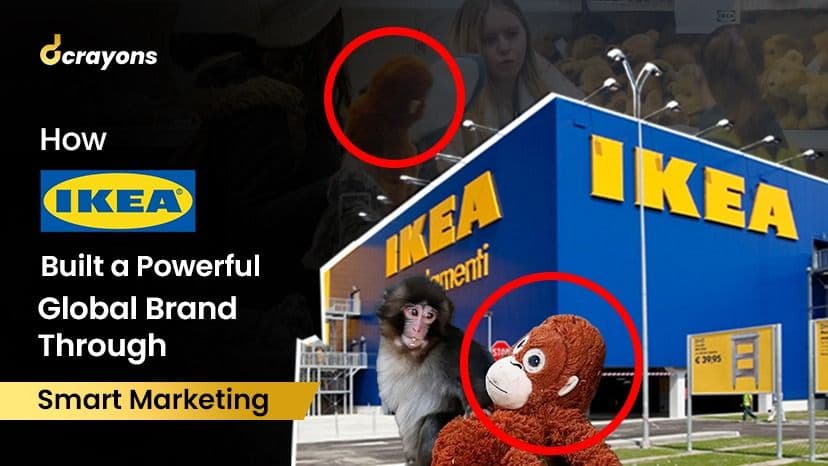
How the IKEA Monkey Soft Toy Went Viral with the "Monkey Punch" Trend
One recent example of how IKEA benefits from cultural moments is the sudden viral rise of its orangutan plush toy. As the "monkey punch" trend which led users to create humorous reels and memes and parody clips that featured the IKEA orangutan soft toy. The plush toy displayed both its playful facial expressions and its special appearance which made it suitable for reaction-based video content. The internet joke started out as a fun joke which eventually rebuilt into actual customer purchasing patterns.
IKEA orangutan plush toys experienced a substantial increase in online search results and product page views and in-store sales across multiple markets. The toy experienced a complete sellout in various locations because customers wanted to join the trending moment. The observation shows that IKEA possesses strong brand recognition which enables the company to distribute products effectively because the brand already benefits from cultural trends. IKEA achieved successful results through user-generated content without needing to start an official marketing initiative which generated more store traffic and improved search results and created sales growth through the social media trend.
Overall Summary
The growth of IKEA as a small Swedish company in 1943 to become the world furniture giant is evidence of one thing:
Strong marketing is not about advertising more . it is about positioning smarter.
Since innovation based on a flat pack, IKEA has created a brand that balances affordability and aspirations through emotional advertising, global-local balance.
IKEA is also one of the most compelling brands that business organizations planning to expand around the globe should consult in terms of strategic branding, cost leadership, and digital evolution.
When brands possess a clear vision, customer psychology, and intelligent marketing implementation, it is not impossible to take over the world.