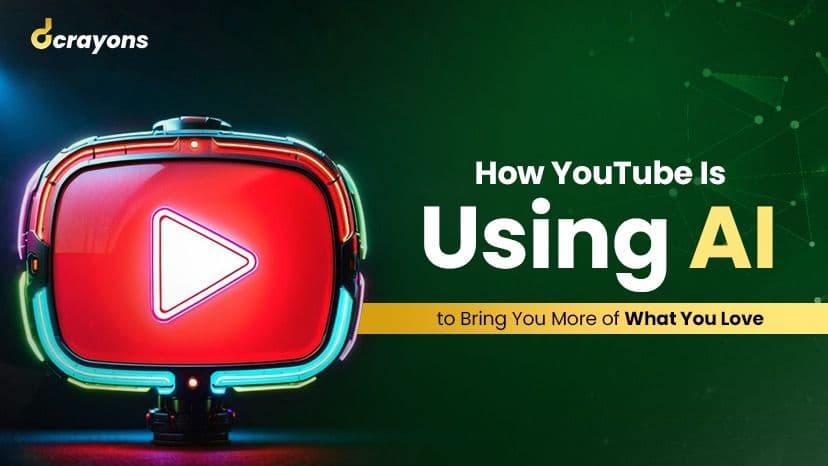
YouTube has evolved from a simple video-sharing site into something more thanks to the AI-driven engine that powers it. With two billion monthly active users, YouTube currently employs some of the most sophisticated AI algorithms in the world.
A complex layer of AI algorithms that work continuously in the background is responsible for every video recommendation, automated transcription, and customized feed. The system's primary objective is to identify your preferences and then deliver more of them to you more quickly, intelligently, and precisely than before.
This article also discusses YouTube's use of AI for content personalization, support for creators, and improvement of the user experience that is shaping the future of digital media.
The Basis: YouTube's AI
Although YouTube has been using artificial intelligence for more than 10 years, the company has finally made the decision to deploy it aggressively. Machine learning models now influence almost every facet of the platform, including search, recommendation, content moderation, and even advertising.
In fact, the YouTube AI manages a massive dataset that includes the viewer's past actions, searches, likes, comments, shares, and other details such as the type of device used, the amount of time spent watching, and even hovering over a thumbnail without clicking. These cues are used by the algorithm to surface the most likely next piece of content for the user.
This whole ecosystem is extremely important for brands and marketers to track. Most companies prefer to hire a social media agency to understand how Google operates on YouTube and align their content plans with those intelligent systems.
How the Recommendation System Works
YouTube's recommendation engine is arguably its most powerful AI application. It determines what appears on:
- Your Home feed
- "Up Next" suggestions
- Suggested videos sidebar
- Notifications
Instead of simply promoting the most popular videos, YouTube's AI focuses on relevance. Two users searching for the same term can receive completely different results based on their personal viewing habits.
The system evaluates:
- Watch time (not just clicks)
- Viewer satisfaction surveys
- Engagement signals (likes, dislikes, comments)
- Viewing patterns over time
This means YouTube isn't just asking, "What did you click?" but rather, "What did you actually enjoy?"
AI-Powered Search: Understanding Intent Beyond Keywords
YouTube is the world's second-largest search engine, and AI plays a key role in how search results are ranked.
Modern AI models allow YouTube to:
- Understand synonyms and context
- Interpret spoken words inside videos
- Match user intent rather than exact keywords
For example, a search for "how to fix a slow laptop" may surface videos titled "Speed Up Your PC in 10 Minutes," even if the exact phrase doesn't appear in the title.
This semantic understanding benefits both viewers and creators, making high-quality, relevant content easier to discover.
AI and Content Moderation: Safeguarding YouTube
With over 500 hours of video uploaded every minute, manual moderation is impossible. AI helps YouTube detect and manage harmful or policy-violating content at scale.
Key Areas Where AI Helps Moderate Content
- Detecting hate speech and harassment
- Identifying misinformation
- Flagging violent or explicit material
- Enforcing copyright through Content ID
These systems scan videos, audio, text, and metadata, often removing or limiting harmful content before it ever gains traction. Human reviewers then step in for more nuanced decisions.
This hybrid approach allows YouTube to balance scale, accuracy, and fairness.
Using AI Tools to Help Creators Succeed
AI doesn't just serve viewers; it also empowers creators.
Smart Analytics and Insights
YouTube Studio uses AI to provide creators with insights such as:
- Predicted audience retention drops
- Optimal posting times
- Personalized content suggestions
These insights help creators understand what resonates with their audience and how to improve future videos.
Auto Captions and Translation
YouTube's speech recognition AI generates auto-generated captions in different languages simultaneously, helping content reach a global audience. AI-assisted machine translation also lets creators reach international audiences without manual localization.
For influencers and companies partnered with a best social media agency, the technology provides data-based insights that can multiply the impact of marketing efforts and audience engagement.
AI in Advertising: Finding the Correct Audience for Brands
YouTube's ad system is likewise heavily dependent on AI. Rather than just placing ads on top videos, AI assesses user activity to deliver ads that are most relevant to individual viewers.
What AI Optimizes in Ads
- Target audience selection
- Ad placement timing
- Type of ad (skippable, shorts, bumper ads)
- Forecasting performance and allocating budget
This means audiences see fewer annoying ads while marketers get more ROI. AI keeps learning from campaign efficiency, automatically optimizing results over time.
AI-Powered Discovery and YouTube Shorts
The YouTube platform is experiencing a great deal of transformation in how it handles video categories, and Shorts. short-form videos. is one place where artificial intelligence plays a huge role in discovery.
There is a significant difference between classical videos and Shorts: the latter is completely determined by fast engagement signals such as replays, swipes, and completions. AI models test Shorts very quickly with small groups of users, and if there is a high engagement level, distribution is scaled up.
Thus, new creators are given a chance to go viral without having a subscriber base, the playing field is leveled, and creativity is encouraged.
AI and the Emotional Aspect of Content
YouTube's AI gets better and better at recognizing emotional signals. The site can deduce whether content is soothing, thrilling, informative, or fun by studying the speaker's voice, speed, gestures, and audience reactions.
This capability enables:
- Suggesting content that matches the viewer's mood
- Surfacing mental-health-related content
- Increasing viewer satisfaction
The end product is an understanding closer to human-like of what people want to see at varying times of their day.
Transparency and Ethical Difficulties
With great power comes great responsibility. YouTube faces ongoing challenges around algorithm transparency, echo chambers, and content bias.
To address these concerns, YouTube has:
- Published recommendation system explainers
- Given users more control over watch history
- Reduced recommendations of borderline content
AI models are continually refined to balance personalization with diversity, helping users discover new perspectives rather than staying trapped in narrow content loops.
AI's Future on YouTube
Looking ahead, YouTube's AI is expected to become even more predictive and interactive. Potential future developments include:
- AI-assisted video creation
- Real-time content personalization
- Smarter creator-viewer interaction tools
- Enhanced virtual and augmented reality experiences
For brands, creators, and a social media agency, staying aligned with these advancements will be essential for long-term success on the platform.
Overall Summary
YouTube's use of AI has completely changed how people search, watch, and interact with video content. By assessing user behavior, intent, and educating itself constantly, YouTube provides a highly personalized service that feels natural and well-suited to the user.
AI has played an undefinable yet significant role in pushing YouTube to the top, along the lines of smarter recommendations, safer spaces for users, and stronger tools for creators and advertisers.
The YouTube of tomorrow is already taking shape, and continued technological innovation will not just connect the best content to consumers; smart links between users and the content they love will be established more reliably than ever.