India’s food delivery industry has grown rapidly over the past decade, yet very few businesses have been able to build both scale and emotional engagement with clients. Zomato is one of the strongest examples of how marketing, branding, and product experience can work together to dominate a competitive market.
What began as a simple restaurant discovery platform has turned out to be one of the top food-tech firms in India due to smart marketing strategies, strong leadership, data-driven decisions, and consistent customer communication.
This blog discusses the way Zomato has dominated the food delivery market through innovative marketing and customer first thinking.
Founder Overview
Zomato was founded by Deepinder Goyal, 43 years old, an IIT Delhi graduate in Mathematics and Computing. Before becoming an entrepreneur, he worked at Bain & Company as a management consultant.
The idea for Zomato came from a simple problem . people in his office struggled to find restaurant menus online. To solve this, Deepinder created Foodiebay in 2008, which later became Zomato. It was founded by Deepinder Goyal in 2008 as a restaurant discovery platform originally named Foodiebay.
Deepinder Goyal later gained wider public recognition as a judge on Shark Tank India, where he invested in startups and shared insights on building sustainable businesses. His leadership philosophy emphasizes product quality, brand identity, and long-term growth.
The Beginning of Zomato
Initially, Zomato focused on restaurant discovery. Users could browse menus, read reviews, and explore dining options. This helped the company build a strong database of restaurants and valuable customer behavior insights even before entering delivery.
Zomato launched its food delivery services in India in 2015, transitioning from restaurant discovery to a logistics-driven platform.
This move allowed Zomato to compete with other delivery services while using its early experience in understanding customer preferences and dining behavior.
Building a Strong Brand Voice
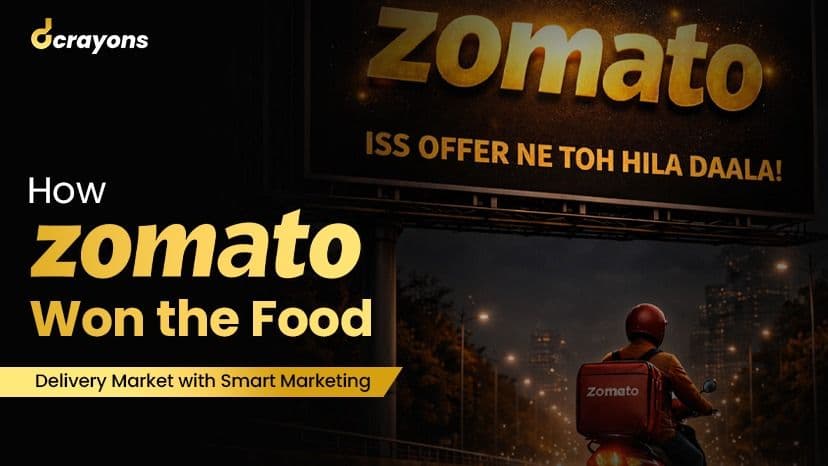
One of the biggest marketing strengths is the unique personality of Zomato. Zomato is not a corporate or over-promotional communicator, it communicates in a friendly, humorous, and relatable tone.
The brand consistently provides: from Instagram captions to app alliances.
- Clever humor
- Pop-culture references
- Short, impactful copy
With the help of this kind of strategy, Zomato becomes immediately recognizable and is able to reach a wide audience. The marketing approach of the brand is based on the humor and simplicity to establish emotional connection with customers.
Social Media and Influencer Marketing
Zomato’s social media presence is one of its strongest marketing channels. The company produces content that is:
- Trend-based and timely
- Festival- and event-oriented
- Highly visual and shareable
The influencer marketing was another service used by Zomato to target niche audiences. In addition to using solely celebrities, Zomato works with:
- Food bloggers
- Local creators
- Instagram and YouTube influencers
These kinds of partnerships focused on the restaurant experiences, the food problems or new campaigns like Zomato Gold that create authenticity. The partnership enabled Zomato to collaborate with food creators and micro-influencers and achieve the trust of the brand and the recognition of the target communities.
Through these campaigns, food delivery was not an experience found in the app, but social content, which people like sharing.
Push Notifications That Feel Human
Zomato applied the concept of push notifications as a marketing channel by sending personalized messages that are humorous.
Instead of generic alerts, Zomato sends:
- Late-night hunger reminders
- Weather-based food recommendations
- Personalized restaurant recommendations
These messages are chatty and they are more interesting to the user without being an advertisement. The messages that Zomato deploys are founded on humor, and this makes them memorable on behalf of the customers with the intention of returning again.
Data-Driven Personalization
Zomato uses the customer information to improve its recommendation and marketing services. The application analyzes the past history of orders, the location, time, and favorite of food to suggest restaurants and promotions that may be applicable.
Zomato offers a custom experience through the revelation that is customer behavior, and this increases user loyalty and trust.
Personalized recommendations make the app convenient and are more likely to make a customer re-order, whereas they also cause the feeling of trustworthiness and power in the mind of the user.
Strategic Expansion and Quick Commerce
Zomato added additional services other than food delivery to expand its ecosystem. Initiatives include Zomato Gold membership, Restaurant partnerships, Cloud kitchens, Quick commerce
In 2022, Zomato acquired Blinkit and entered the quick-commerce and instant delivery segment, enhancing its service delivery and increasing the services offered to the customer.
Integration of technology and logistics helped to make the experience of the delivery stress-free, and this reinforced the image of a dependable brand.
Product Experience as a Marketing Advantage
Although marketing attracts the users to the platform, a good product experience is also part of the success of Zomato.
Key elements include:
- Quick, stable application performance.
- Easy and user-friendly ordering process.
- Clear restaurant listings
- Accessible delivery monitoring.
The development of Zomato comes because of the integration of innovative marketing and reliable service, and a customer feels confident in this brand and keeps using it.
Such a focus on quality produces the perception that marketing can count on an experience that is keeping the users active.
Why Customers Trust Zomato
Zomato’s digital marketing strategy, combined with its operational reliability, helped the brand build long-term credibility and customer trust.
Years of experience in restaurant discovery, combined with personalization based on data, influence marketing, and quality service, made the brand trustworthy and trustworthy.
The customers trust Zomato because of the value that is delivered consistently, personalized experience and interesting contents that customers can get on different platforms.
This confidence is what differentiates Zomato among the competitors who had to apply as much as they could use discounts or intensive marketing.
Marketing Lessons from Zomato
Zomato’s journey provides valuable lessons for startups and brands:
- Develop a familiar and recognizable brand voice.
- Connect with people via social media and influencer marketing.
- Create individualized experiences with customer information.
- Concentrate on quality and reliability of the products.
- Marketing should be shared with the use of creative content.
Long-term growth is concluded by strong branding, authentic marketing, and excellent customer experience.
All these factors were balanced by Zomato, making users loyal customers and promoters.
Overall Summary
Zomato’s growth story demonstrates how marketing, technology, and product experience can assist each other to create a leadership in the market.
Zomato started as a menu-listing platform in 2008 and developed into a publicly listed food-tech business which demonstrates that marketing and technology together with product experience create market leadership.
Through social media and influencer marketing combined with push notifications and personalized recommendations. Zomato succeeded in rebuilding from a food delivery application to the leading way.
Effective branding together with genuine marketing and exceptional customer service creates the foundation for sustainable business expansion.
Zomato achieved success in maintaining customer loyalty through effective management of all operational elements which resulted in users becoming devoted customers and brand ambassadors.