Digital MarketingDec 15, 2025

Is Zepto’s 10-Minute Delivery Marketing Strategy Under Threat? The Delivery Dilemma Explained with case study.

Viewed 5 min read

Blog image

In the age of hyper-convenience, 10-minute delivery is not only a slogan but a promise that appeals to consumers in an urban environment who do not have to leave their homes to be served with groceries, food, and necessary items. One of the firms at the head of this race is Zepto, a quick commerce startup that in a few months became a unicorn thanks to the light delivery speed and huge discounts. 

However, as the model spreads, it is also becoming a subject of fierce criticisms by politicians, regulators, and health and labour advocates of the population. The 10-minute delivery marketing approach that Zepto once appeared to hold is now subject to a complicated question: Is Zepto under threat due to its 10-minute delivery marketing approach?

The simple response is: yes but not a ban as such at the moment. Instead, worker safety issues, food and product safety scandals, regulatory focus, and crowd pressure are raising a question about how this form of the business should be conducted within the regulatory and ethical environment of India.

The Rise of Quick Commerce and Zepto’s Promise

Fast commerce that delivers groceries and other necessities within minutes has become a hit in India in the last couple of years. Specifically, Zepto emerged as one of the most discussed competitors after indicating that ordered goods would arrive at the door of a customer within 10 minutes. This feature turned out to be an effective selling feature that prompted quick adoption, particularly among Gen Z and urban consumers with hectic lifetimes.

But behind this oily salesmanship, there are now trembling foundations. The reports of operating under stress, dubious adherence to food safety standards, as well as the claims of worker abuse have placed the company and the whole quick commerce industry in a wrongful publicity.

Political and Public Backlash: Worker Safety at the Forefront

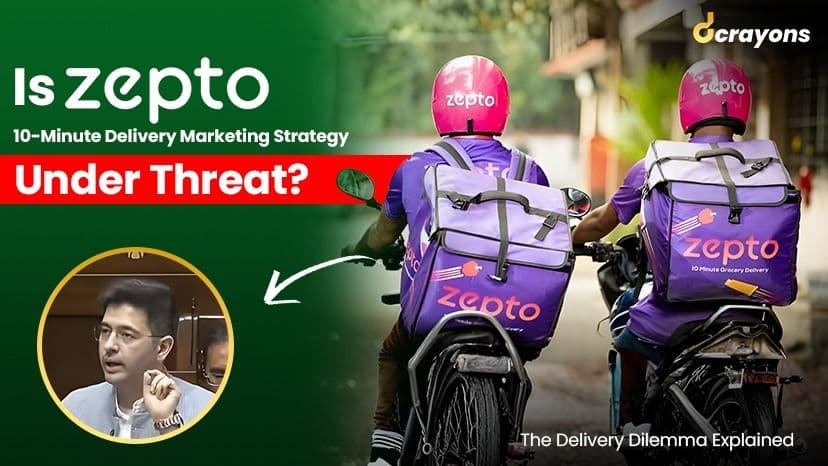
Political corridors represented one of the most obvious indicators that the strategy was also in danger. In early December 2025, AAP MP Raghav Chadha made a highly aggressive call in the Rajya Sabha to outlaw 10-minute delivery services, terming the practice cruelty towards the gig workers who were compelled to work under unsafe conditions to meet very strict deadlines. He encouraged the delivery persons not to be robots but they are human beings with families and rights which should be safeguarded.

The speech made by Chadha illustrated the high pressure that the delivery agents have to endure: they fear losing motivation, getting lower ratings, or even being blocked out of the app in case they fail to meet the strict deadlines of delivery. In his comments, the workers tend to over speed and break the traffic rules only to reach the 10 minute mark endangering their lives.

His action also ignited more widespread popular debate about the morality of extremely fast deliveries putting the situation in the limelight to scrutiny by many who consider it as exploitation more than innovation.

Food and Product Safety Concerns Sweep Under the Carpet

Another front on which this controversial strategy is under fire is food and product safety. Regulators and consumers alike have raised alarms that in the rush to deliver within minutes, basic safeguards may be getting ignored.

Perhaps the most high-profile incident was the suspension of a Zepto warehouse’s food business licence by the Maharashtra Food and Drug Administration (FDA). During an inspection, authorities reportedly found evidence of fungal growth on food products, storage of goods near stagnant water, expired items mixed with fresh stock, and cold storage temperatures that failed to meet regulatory standards

Such findings don’t just harm Zepto’s reputation, they strike at the core of consumer trust. Quick commerce platforms often operate dark stores and small backend warehouses that are invisible to customers but crucial to enabling fast delivery. These facilities need to comply with rigorous food safety protocols akin to those expected of supermarkets and cold chain distributors. When they fail to do so, the gap between marketing promise and reality becomes stark and dangerous.

In some cases, consumers have shared disturbing firsthand accounts on social platforms alleging stale or rotten groceries, expired items, or unsanitary storage conditions. While such accounts like consumer anecdotes on Reddit should be weighed carefully, they reflect a perception problem that compounds regulatory scrutiny.

Regulatory Ground Shifts: More Than Just Policies, It’s National Debate

The backlash has triggered more than just headlines; it has driven regulatory action. After the suspension of licences at specific facilities, agencies have indicated they will continue to inspect and enforce compliance across the quick commerce sector. For example, authorities inspected other dark stores, demanded corrective measures, and warned of legal enforcement should violations persist. 

Additionally, consumer protection authorities have begun looking more closely at whether platforms can even substantiate their “10-minute” claims and whether they properly display expiry dates and MRP information for products sold. 

What this signals is a shift from laissez-faire rapid expansion toward serious enforcement and accountability. Marketers may still tout fast delivery, but unless reliability, safety, and worker welfare are embedded into operations, those claims could face legal and ethical challenges.

The Gig Worker Reality: Unseen Costs Behind the Promise

One of the most persistent criticisms of ultra-fast delivery models is that the cost of convenience often gets shifted to gig workers. Quick commerce platforms typically classify delivery agents as independent contractors rather than employees. This means minimal benefits, limited job security, and unpredictable income.

According to Chadha’s statements and other worker rights advocates, many delivery partners are working 12-14 hour shifts across all weather conditions, without proper protective gear or hazard compensation. Their earnings hinge heavily on customer ratings and incentives tied to delivery speed.

Even a five- to seven-minute delay, which should be acceptable in a crowded city’s traffic conditions, can result in negative customer feedback potentially impacting the worker’s monthly earnings drastically. If that doesn’t raise questions about fairness, it’s hard to imagine what does.

This raises a vital point: no matter how sophisticated the marketing, a business model that places disproportionate risk on workers while transferring the benefits of convenience entirely to consumers and investors may not be sustainable in the long term.

The Consumer Paradox: Convenience vs. Responsibility

The delivery in 10 minutes is very attractive to many consumers. With such a hectic schedule where time is of the essence, having the chance to be able to get the necessities without visiting up to the store is a luxury that is welcome.

But what is being unraveled in the controversy is a paradox; the convenience that consumers are enjoying can be at the cost of hidden expenses, the reduction in the quality, and the unsafe working conditions of the delivery agents and even the pressure exerted on the supply chains to end up cutting corners.

Certain customers have gone further to complain about product quality like stale vegetable produce or inadequate customer service when things go wrong which contributes to a general distrust.

India is not the only country where this is the paradox. The ultra-speed models of delivery are not only challenged in terms of environmental effects, labour procedures, and sustainability on a global scale. However, in India’s context where regulatory frameworks are still evolving and labour protections are comparatively weaker the debate takes on added urgency.

Zepto’s Response and the Path Forward

Zepto has made efforts to protect its operations practices in response to the criticisms. The firm management has said that it has different storage of expired goods and that the inspection by the regulating authorities has confirmed that some of its facilities are in compliance. 

Besides, certain measures like temporarily shutting down operations in certain regions because of the supply chain limitations indicate that the company is changing its strategy under the influence of logistical challenges.

However, reacting to particular cases is not identical to handling broader issues. In the event Zepto or any fast commerce site desires to maintain its promotional advantage, it will not be in a position to depend on hype. It needs to redefine the basis of its strategy and it should pay attention to:

  • Worker rights, safety, and compensation structures
  • Strict adherence to food and product safety standards
  • Transparent communication of delivery time windows
  • Investments in quality supply chain and warehouse management

Regulation Rather Than Prohibition: A Likely Outcome

While politicians like Raghav Chadha have called for banning 10-minute delivery services on ethical grounds, a complete prohibition is not the most likely outcome. Instead, what we’re more likely to see and are already beginning to see is stricter regulation.

Such regulation could entail:

  • Mandatory safety insurance and labour protections for delivery workers.
  • Clearer, enforceable food safety compliance measurements with regular audits.
  • Standards for authentic delivery time expectations.
  • Consumer protection rules around product labelling, expiry visibility, and truthful marketing.

This approach strikes a middle ground: it preserves consumer convenience and innovation while ensuring that progress doesn’t trample on safety, quality, and dignity.

Conclusion: The Marketer’s Dilemma

The promise of delivery in 10 minutes by Zepto represents the heights of radical innovation in quick commerce and, at the same time, the blindness associated with leaps of scale. Although no official ban has been implemented so far, the pillars on which the marketing strategy gained so much power are now called into question in the ethical, legal, and safety aspects.

To succeed in the long term, Zepto and other sites like that should do more than just shine fast. They must embrace responsibility, transparency and accountability into their business model. Only in this case, the promise of convenience can exist in a sustainable way in such a way that it does not conflict with the welfare of workers and consumer safety.

The delivery dilemma is not only about minutes, though, it is whether the race to be first should also be the race to do right.

tags: zepto case study

  • Title Is Zepto’s 10-Minute Delivery Marketing Strategy Under Threat? The Delivery Dilemma Explained with case study.
  • Published OnDec 15, 2025
  • CategoriesDigital Marketing
  • Tags
    zepto case study
  • Author Hitesh

want to work with us

Let’s make someting great together