Monster Energy intends to represent more than just a drink; it emerged as a cultural icon of rebellion, thrill-seeking, and non-conformity. While competing beverage manufacturers were mainly concerned with getting their products into supermarkets, Monster took an entirely different road through culture, community, and lifestyle. That one decision made a big difference. it changed the whole picture.
To this day, Monster Energy competes with the largest global brands at the same level and earns the same loyalty from consumers. loyalty based not only on preference but also on emotion and lifestyle. The article that follows reveals how the marketing strategy of Monster Energy created global buzz, connected with consumers emotionally, and rebuilt a simple beverage into a lifestyle. with lessons that can be applied by modern brands right away.
Monster Energy Didn't Market a Product. It Marketed an Attitude
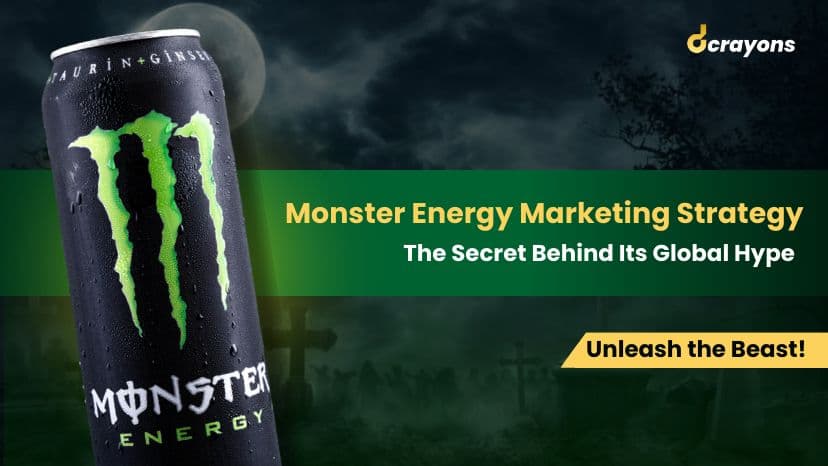
Monster Energy has always been unconventional, essentially creating a new energy drink category. With its youthful, sporty image and radical marketing, the brand made consumers feel they were part of a special group. Monster speaks to people who live fast, push limits, and reject the mainstream.
The logo with the claws, dark colors, and tough lettering signals very clearly:
- Raw strength
- Dissidence
- Bravery
- Individuality
This strong point of view made it clear that Monster would never be the brand that tried to please everyone. just the right crowd. That very focus is one of the most important reasons the brand scaled so fast.
Deep Cultural Embedding Through Extreme Sports
Monster Energy didn't just sponsor sports; it embedded itself deeply within the culture of the extreme sports community. Monster shows up in motocross, BMX, skateboarding, drifting, and rally racing. everywhere the buzz of adrenaline is found. Rather than chasing short-term deals, the company builds long-term relationships with athletes and sports enthusiasts as a core investment.
Monster's involvement feels natural because:
- The athletes reflect the brand's character
- The events are full of energy, natural, and spontaneous
- The company's presence is not felt as an imposition but rather as a privilege
This is similar to the way modern brands focused on growth approach community-first marketing, where being culturally relevant is more important than just being highly visible.
Athletes as Brand Storytellers, Not Endorsers
Monster Energy selects sportsmen who represent a lifestyle, not merely those with the largest popularity. These athletes do not follow the rules. they are the brand.
The brand wins authenticity by allowing the athletes to be themselves:
- The public receives the message with confidence
- The produced material seems genuine, not as a marketing tactic
Thus, the brand's approach shifts the athletes from the role of short-term endorsers (paid mouthpieces) to long-term storytellers. exactly the authenticity-first strategy a performance-oriented marketing agency would recommend today.
Content First, Advertising Second
Monster Energy acts as a media corporation under the cover of a drink brand.
The company's digital world consists of the following:
- YouTube documentaries of high production quality
- Unedited behind-the-scenes footage
- Event highlights and athletes' off-the-beaten-track stories
- Short-form social media content designed for maximum engagement
Monster does not interrupt attention. it earns it.
The brand does not push ads but produces the content its audience is already looking for. This content-led growth strategy powers organic reach, loyalty, and shareability across platforms.
Experiential Marketing That Creates Memories
Monster Energy has concluded that experiences make stronger memory links with the brand than advertising. The company devotes a lot of money to:
- Live event activations
- Music festivals
- On-the-ground athlete interactions
- Immersive brand zones at competitions
These activities move consumers from just being there to being part of it. People do not simply consume Monster; they live it. That bond is so strong that it cannot easily be transferred to competitors.
Packaging That Commands Attention Without Saying a Word
Monster's packaging technique is intentionally very loud and very obvious:
- Tall cans that stand out on the shelf
- Strong graphics
- Special and limited designs linked to events and athletes
The can, without even a word, conveys the characteristics of energy, power, and self-assurance. This visual uniformity strengthens brand recognition at every consumer touchpoint.
Global Brand, Local Relevance
Monster Energy has a consistent worldwide identity but executes it differently in every location. The company engages local sports stars, sponsors regional events, and modifies advertisements to fit the market without changing the brand's basic character.
This compromise. global uniformity coupled with local significance. has become a strategic practice that both cost-effective and top international agencies employ to support brand global expansion.
Why Monster Energy's Strategy Still Works
Monster Energy thrives because it adheres to timeless principles:
- Culture above campaigns
- Community above reach
- Authenticity above perfection
- Experience above exposure
The company never chases trends; instead, it creates the surroundings where trends originate.
Key Marketing Lessons Brands Can Learn from Monster Energy
- Be aware of the target audience you are not marketing to.
- Embed yourself into culture; do not promote toward it.
- Allow trusted communities to narrate your story.
- Develop premium content rather than ads users skip.
- Generate encounters instead of views.
These rules apply to global beverage brand building and to scaling any marketing strategy.
Overall Summary
Monster Energy's success is the result of bold positioning, cultural involvement, and brave brand execution. By choosing lifestyle over noise marketing, Monster shifted from being an energy drink to becoming a global presence.
The marketing tactics of Monster Energy make one thing very clear for brands that aim to create long-lasting relevance, not just short-lived attention:
Once your brand is integrated into a culture, the hype becomes enduring.