YouTube has always been more than just a platform for uploading videos. Gradually, it has been rebuilt into a complete ecosystem where content creators, brands, advertisers, and viewers interact in ever more subtle ways.
With the introduction of AI chatbots based on the personalities of the most popular creators, the platform is making a daring experiment that signifies an important turning point not only in how users interact with content but also in how creators' presence is extended beyond the video.
This is not merely an AI issue; it is a matter of creator economies, fan engagement, and digital marketing strategies. For every brand and marketer, including every cutting-edge social media marketing agency, this change creates a new dimension of interaction that has the potential to change audience relationships completely.
Understanding YouTube's AI Chatbot Experiment
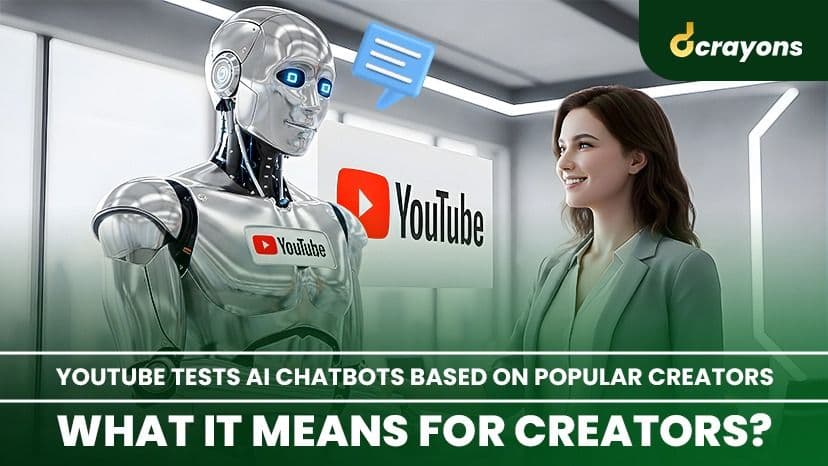
YouTube is said to be trying out AI chatbots that copy the style, knowledge, and personality of famous creators. These chatbots will be able to communicate with the audience in real time, provide answers, suggest videos, and take part in chats that feel personal and creator-driven.
These bots are not like standard AI assistants; they are specially trained on a creator's complete library of content, including not only videos but also captions, transcripts, and audience interaction patterns. Ultimately, a digital version of the creator is formed, who can "speak" to the audience even when the real one is not online.
For the audience, this translates into immediate information and a stronger bond. For the artists, it is a way to reach out to and interact with millions of subscribers at scale, even without being physically present all the time.
Why YouTube Is Investing in Creator-Based AI
The primary focus of YouTube's strategy is retention. When users stay on the platform longer, the value it generates for everyone. from advertisers to creators. increases. The presence of AI chatbots contributes to this increase in session time by making interactions livelier and more tailored to users.
Among the principal reasons for the implementation of such a project are:
- Better user experience: Viewers can ask their questions right away instead of searching through comments or watching several videos.
- Better creator-fan relationships: Even if the interaction is through AI, fans still feel that they are being listened to and recognized.
- Creation of new revenue opportunities: The use of premium chatbot features, brand integrations, and sponsored conversations might open up new revenue streams.
The experiment is a clear signal for digital marketers that conversational content is becoming just as significant as visual content.
What This Means for Content Creators
For creators, AI chatbots represent both an opportunity and a responsibility.
On the positive side, creators can:
- Engage audiences 24/7 without burnout
- Guide viewers toward playlists, merch, or memberships
- Answer frequently asked questions automatically
- Maintain consistent brand voice across interactions
However, creators will also need to ensure authenticity. Audiences are quick to sense when interactions feel robotic or overly scripted. Successful creators will likely collaborate closely with YouTube and tech teams to fine-tune chatbot behavior so it genuinely reflects their personality.
This is where professional guidance becomes valuable. Many creators already work with a social media marketing agency to manage branding, analytics, and growth. Adding AI-driven engagement to the mix will require strategic planning rather than experimentation alone.
The Impact on Brands and Influencer Marketing
YouTube's AI chatbots could significantly rebuild influencer marketing. Imagine a brand collaboration where a creator's chatbot can answer questions about a sponsored product, explain features, or guide users to purchase links instantly and at scale.
For brands, this means:
- More consistent messaging
- Higher conversion potential
- Reduced dependency on live creator availability
For agencies, especially a social media marketing agency in Delhi working with both local and global brands, this creates new campaign formats. Instead of relying solely on video integrations, agencies can design interactive chatbot journeys that support brand storytelling in a conversational way.
However, transparency will be crucial. Viewers must clearly know when a chatbot is promoting a product versus offering neutral information.
How AI Chatbots Fit into a Broader Social Media Strategy
AI chatbots on YouTube should not be viewed in isolation. They are most effective when integrated into a holistic social media strategy.
For example:
- A viewer discovers a video on YouTube
- They interact with the creator's chatbot to learn more
- The chatbot directs them to Instagram, a newsletter, or a community platform
- Follow-up content reinforces the message across channels
This cross-platform flow strengthens brand recall and builds long-term relationships. Smart marketers will align chatbot interactions with content calendars, campaign goals, and audience segmentation.
This is where experienced agencies add real value. A well-planned strategy ensures that AI tools enhance human creativity rather than replace it.
The Role of Social Media Marketing Agencies
As platforms adopt AI-driven engagement tools, the role of a social media marketing agency becomes more strategic than ever. Agencies are no longer just posting content or running ads. they are designing experiences.
A forward-thinking social media marketing agency in Delhi, for instance, might help clients:
- Define the chatbot's tone and conversational boundaries
- Align chatbot interactions with brand voice guidelines
- Track engagement metrics and optimize responses
- Integrate chatbot data into broader performance analysis
For businesses new to AI, agencies act as translators. bridging the gap between technology and marketing objectives.
Ethical and Practical Considerations
While the potential is exciting, YouTube's AI chatbot experiment also raises important questions.
- Authenticity: How do creators maintain trust when fans are talking to AI?
- Data privacy: How is user data being used to train and improve these bots?
- Creative control: How much oversight do creators have over chatbot responses?
YouTube will need clear policies, and creators will need to communicate openly with their audiences. Brands and agencies must also adopt ethical guidelines to ensure responsible use of AI in marketing.
Ignoring these aspects could lead to backlash, which no platform or brand can afford.
What Businesses Should Do Now
Although AI chatbots on YouTube are at an experimental stage, companies and marketers should start preparing to use them.
Practical steps include:
- Investing in good content libraries that AI can be trained on
- Refining brand voice and messaging structures
- Trying conversational marketing on current platforms
- Collaborating with a trusted social media marketing firm to stay current
For Indian businesses, particularly those collaborating with a social media marketing agency in Delhi, this could be taken as a chance to compete at the global scale, by using emerging technologies in early stages.
The Future of YouTube and AI-Driven Engagement
YouTube's experiment is probably only the first of many to come. As AI technology develops, we should look forward to seeing chatbots turn into virtual co-hosts, content curators tailored to individual preferences, and storytellers that interact with the audience.
The signal sent to creators, brands, and agencies is unambiguous: engagement is transitioning from merely passive viewing to active dialogue.
The ones who are quick to adapt. by mixing creativity, strategy, and technology. will not only be the first but also the strongest to reap the benefits in this newly formed digital environment.
Overall Summary
The headline "YouTube Tests AI Chatbots Based on Popular Creators" is more than just a headline; it is a foretelling of the social media future. With the fusion of AI and creator power, YouTube is changing the dynamics of audience-content connectivity and scaling brand communication at the same time.
Creators will see the advantages of growth and reduced burnout. Brands will have a new channel for engagement and conversion. And for every social media marketing agency, it will be a chance to reposition their worth in a world driven by AI.
The platforms might be different, and the tools might be more advanced, but one thing will not change: meaningful connections will always be the main factor in successful digital marketing.